
Monday, July 4, 2016


Monday, June 27, 2016
Sunday, June 26, 2016
Last night we did rockets with Daddy, Mommy and Grandpa. Thank you Grandpa Pat for buying them! It was fun - video to come.


Off to church this morning:


Praying a rosary??

In the tomato garden with Grandma


The boys pulling out the starter from the pickup. We need to have it running in tip top shape for the 4th of July, as fireworks cause fires. That water tank on the back will be very important.


Ahh...the 4-wheeler. I think Isaac would live on this if he could.


Ben super dirty and ranchy...

Isaac taking a bath in the sink after helping with dishes:

Our evening expedition:


Isaac found some bones!


A very good day :)
Saturday, June 25, 2016
Dry, Dry, Dry
So this is a "dry year" in Rapid. There is very little alfalfa to cut, and many of the fields will just just be used for grazing land. We have done one cutting that yielded far fewer bales than previous years - last year was very wet with three cuttings! Below are some shots of a stock dam bed on the property:




As you can see, it is very dry.
This morning we fed the cats with Grandpa Bob. Every morning the barn cats (of which I would estimate there are around 30) circle the house in anticipation of Bob and his bucket.


Some more photos:
Eli with the fly swatter

Isaac watering Grandma's flowers

Isaac's truck garden


Making friends at the park


Isaac quickly learned the new phrase "my turn!"
Friday, June 24, 2016
Summer 2016
Hi folks,
Christine here. I'm going to do my best to keep a log of our activities on the ranch this summer.
Today is our first day on the ranch. We got in last night around 5pm Mountain Time, and right away Isaac got a tractor ride with Grandpa. Today it's supposed to get up to 100 degrees, so we're trying to stay cool. It's amazing weather - really dry. Peggy refers to it like a desert, with temps dipping down sometimes in to the 40's at night.
We ran some errands in town today and then had time for some play:


Christine here. I'm going to do my best to keep a log of our activities on the ranch this summer.
Today is our first day on the ranch. We got in last night around 5pm Mountain Time, and right away Isaac got a tractor ride with Grandpa. Today it's supposed to get up to 100 degrees, so we're trying to stay cool. It's amazing weather - really dry. Peggy refers to it like a desert, with temps dipping down sometimes in to the 40's at night.
We ran some errands in town today and then had time for some play:
Riding on the bobcat:


video:
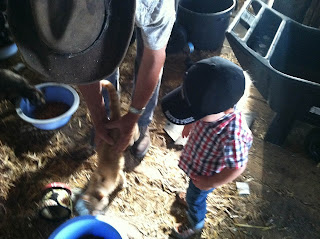
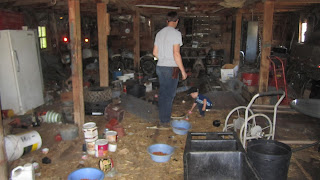
In the barn:

Looking for cats in the old shop:

that's the morning so far!
Monday, June 29, 2015
Inside Out's Geography of the Human Mind
Parents, children, and quite literally anyone with a mind has reason to take interest in Pixar's new film Inside Out. Set on the objectified stage of a girl's mind as she goes through a tumultuous period of her life, Inside Out has much to offer for those who have pondered the inner workings of the young adult—and more broadly, human—mind. As Riley, our central character, moves with her family from Minnesota to California, we are introduced to the difficulties of this physical geographic change by means of a more abstract and psychological geography. The audience quickly encounters the “cast” of Riley's emotions: Fear, Anger, Disgust, Sadness, and Joy. These characters live in the command center of Riley's mind, but as we progress through the film, we learn of a broader, sprawling internal geography that includes such destinations as Long Term Memory, Imagination, Abstract Thought, the Subconscious, various Islands of Personality, and the pivotal Abyss of the Forgotten. On this basis, the film weaves a touching story of change and growth that offers unique learning and teaching tools to parents and children alike.
The film has been lauded for the careful way in which it portrays the human mind. Pixar's creative team included trained psychologists who helped guide the film’s portrayal of the mind, and the film is surprisingly well-served by this technical support team. From the outset, the audience is given the sense that there is great depth to Pixar's psychology when we are introduced to the room containing Riley's “manuals,” a sizable room housing volume after volume of detailed explanations of how Riley's mind works—though no one had taken the time to read them before the action of the film.
This “map” provided by the psychological experts drives the central drama and action of the story as Joy and Sadness get lost and try to navigate through parts of Riley's mind that they had never visited before. Most essentially, the command center of Riley's mind is separated from the other major components by a vast chasm that entombs everything Riley has ever forgotten. Also importantly, the islands representing the major components of Riley's personality are powered by “core memories” housed in the command center; the islands themselves are perched precariously over the abyss of forgetfulness. Some geographic features play to English turns of phrase (the “Train of Thought,” for instance) and a number of these embodied metaphors also play significant parts in the storyline. In fact, many of these geographic details are absolutely essential to the progression of the film's plot; there would be no movie if, for example, Riley's mind were portrayed as a vast, uniform plain with various well-marked buildings.
Of course, we are dealing with a children's movie here, so any emphasis on the playful components of the film must come with a variety of caveats. Certainly the minor details of this geography are not meant to be taken perfectly seriously. Certainly this geography is somewhat subject to the vagaries of the English language. Certainly some features (such as Abstract Thought) ultimately play merely tangential or humorous roles in the storyline. But despite all these caveats, the audience is well-served to think deeply about the way in which Pixar has portrayed the human mind. Though it is a children's movie, it is a Disney children's movie that will affect the way that countless youth think about their own internal or mental life.
It is especially enlightening to compare Pixar's portrayal with some general observations from the Christian moral tradition. Despite being billed as an original script, much about Pixar's portrayal of the human mind is in continuity with long strands of Christian thought about the human mind. Most basically, the idea that the human mind has various “faculties” that perform distinct and essential tasks is a deeply Christian one, borrowed in turn from Greek reflection on the human mind. Equally significant is the idea that these faculties are linked in particular and unalterable ways: it is Riley's personality traits and not her imagination that stands over the abyss; it is Riley's long-term memory and not her subconscious that meanderingly connects her personality traits to one another; and it is Riley's emotions that are distinct, alert, conscious agents, and not her core memories. Each of the details in Pixar's portrayal says something about the kind of mental agents human beings are. This “mapping” of the mind's geography is a path long-travelled by a plethora of Christian portrayals of the moral life.
It is not difficult to glean some of the ideas that the movie means to teach by means of its distinctive mental geography—most of which are not at all controversial. Sleep helps to categorize memories into long-term “storage.” Neglected memories are forgotten. Personality is shaped by fundamental, long-remembered experiences. Other ideas are even consonant with Christian conceptions of the mental world, perhaps especially the idea that there is a central “command center” from which the various functions of the mind are coordinated. Further, by portraying the mind as a geographic place, the audience is imbued with the idea that there is a fundamental stability to human nature—a nature that we cannot change at our own whim and thereby guarantees that we are all in this together; that we all share certain essential qualities and features; that we are all equal. This idea, too, is very important to a Christian understanding of salvation. Again, each emotion (even those sometimes referred to as “negative” emotions) has an essential role to play in human flourishing in Pixar’s vision of the mind—and this idea, too, is deeply Christian. And in its own way, the central conceit of the film—the personification of the emotions—also has deep roots in Christian reflection on the mind. All of these ideas can take their place unproblematically in a properly Christian pedagogy of the human mind.
As one continues to explore this mental world, however, one might also ask certain prodding questions—questions that may indicate ways in which a Christian geography would differ from that of Disney's creative team—or at least require further clarification. Where, for instance, is the Island of Intellect? Where is Director Will? Intellect and will are faculties that play an essential part in Christian psychology, yet find no clear place in Pixar's geography or cast.
Most importantly, though, it the pivotal question of emotionality: what is the fundamental relationship of Riley with her emotions? Throughout the film, Anger, Fear, Disgust, Sadness, and Joy are shown at the control board of Riley's mind, taking turns, fighting for control, and occasionally working with each other. Is human action really as simple as that, though? Is there nothing between Riley's emotions and her external actions? Is the human agent nothing more than conflicting desires, vying for control of external acts? Pixar's promotional material doesn't clearly answer this question, though it does suggest it: “Like all of us,” Pixar informs, “Riley is guided by her emotions.” What is the nature of that guidance?
Perhaps the most dramatic moment of the movie—when Riley decides to run away from home—also suggests but does not answer this question of the relationship of Riley to her emotions. Anger inserts the “run away bulb” into the control board of Riley's mind, but Anger's suggestion of this action is not sufficient for carrying it out. A few moments after the insertion, the bulb rotates into place and illuminates; Anger exclaims, “She took it!” What happened there? If we are supposed to be seeing the internal workings of Riley's mind, something very important is missing here. Some hidden force—choice—acted without any visible place in the plot. Hence, something ineffable hides behind Riley's emotions: an ability to discern their meaning and even (potentially) to reject their suggestion. This “real” Riley stands at this pivotal moment above and beyond her emotions, yet does not get a place on the cast or a landmark in her geography.
In a Christian geography of the mind, much more attention must be paid to the conversation between choice and emotion, as that relationship is essential to any properly moral act. In the film, this conversation passes by without comment in a split second, but nothing about Inside Out's portrayal of the human mind is more suggestive, significant, or elusive. The movie's emotional cast suggests that desire is definitive in the matter of human action and, in a sense, that can be true. But that key moment of the film—when Anger exclaims “She took it!”—may show that there is a significant omission from the cast. Who took it? If we're already supposed to be looking at Riley's mind, what “she” is left to “take” the suggestion?
If Inside Out is to function as a pedagogical tool for parents and children in learning how to cope with and integrate their emotions into a healthy and well-balanced mental life, the viewer is well-advised to keep asking: Where is Riley? And if, in the end, she is the “ghost in the machine” who elusively functions beyond and above her emotions and who remains incapable of portrayal, how much have we actually learned about human emotional development? Despite these unanswered questions, Inside Out remains a touching story that in many ways contains the underpinnings of a deeply Christian understanding of the human subject.
The film has been lauded for the careful way in which it portrays the human mind. Pixar's creative team included trained psychologists who helped guide the film’s portrayal of the mind, and the film is surprisingly well-served by this technical support team. From the outset, the audience is given the sense that there is great depth to Pixar's psychology when we are introduced to the room containing Riley's “manuals,” a sizable room housing volume after volume of detailed explanations of how Riley's mind works—though no one had taken the time to read them before the action of the film.
This “map” provided by the psychological experts drives the central drama and action of the story as Joy and Sadness get lost and try to navigate through parts of Riley's mind that they had never visited before. Most essentially, the command center of Riley's mind is separated from the other major components by a vast chasm that entombs everything Riley has ever forgotten. Also importantly, the islands representing the major components of Riley's personality are powered by “core memories” housed in the command center; the islands themselves are perched precariously over the abyss of forgetfulness. Some geographic features play to English turns of phrase (the “Train of Thought,” for instance) and a number of these embodied metaphors also play significant parts in the storyline. In fact, many of these geographic details are absolutely essential to the progression of the film's plot; there would be no movie if, for example, Riley's mind were portrayed as a vast, uniform plain with various well-marked buildings.
Of course, we are dealing with a children's movie here, so any emphasis on the playful components of the film must come with a variety of caveats. Certainly the minor details of this geography are not meant to be taken perfectly seriously. Certainly this geography is somewhat subject to the vagaries of the English language. Certainly some features (such as Abstract Thought) ultimately play merely tangential or humorous roles in the storyline. But despite all these caveats, the audience is well-served to think deeply about the way in which Pixar has portrayed the human mind. Though it is a children's movie, it is a Disney children's movie that will affect the way that countless youth think about their own internal or mental life.
It is especially enlightening to compare Pixar's portrayal with some general observations from the Christian moral tradition. Despite being billed as an original script, much about Pixar's portrayal of the human mind is in continuity with long strands of Christian thought about the human mind. Most basically, the idea that the human mind has various “faculties” that perform distinct and essential tasks is a deeply Christian one, borrowed in turn from Greek reflection on the human mind. Equally significant is the idea that these faculties are linked in particular and unalterable ways: it is Riley's personality traits and not her imagination that stands over the abyss; it is Riley's long-term memory and not her subconscious that meanderingly connects her personality traits to one another; and it is Riley's emotions that are distinct, alert, conscious agents, and not her core memories. Each of the details in Pixar's portrayal says something about the kind of mental agents human beings are. This “mapping” of the mind's geography is a path long-travelled by a plethora of Christian portrayals of the moral life.
It is not difficult to glean some of the ideas that the movie means to teach by means of its distinctive mental geography—most of which are not at all controversial. Sleep helps to categorize memories into long-term “storage.” Neglected memories are forgotten. Personality is shaped by fundamental, long-remembered experiences. Other ideas are even consonant with Christian conceptions of the mental world, perhaps especially the idea that there is a central “command center” from which the various functions of the mind are coordinated. Further, by portraying the mind as a geographic place, the audience is imbued with the idea that there is a fundamental stability to human nature—a nature that we cannot change at our own whim and thereby guarantees that we are all in this together; that we all share certain essential qualities and features; that we are all equal. This idea, too, is very important to a Christian understanding of salvation. Again, each emotion (even those sometimes referred to as “negative” emotions) has an essential role to play in human flourishing in Pixar’s vision of the mind—and this idea, too, is deeply Christian. And in its own way, the central conceit of the film—the personification of the emotions—also has deep roots in Christian reflection on the mind. All of these ideas can take their place unproblematically in a properly Christian pedagogy of the human mind.
As one continues to explore this mental world, however, one might also ask certain prodding questions—questions that may indicate ways in which a Christian geography would differ from that of Disney's creative team—or at least require further clarification. Where, for instance, is the Island of Intellect? Where is Director Will? Intellect and will are faculties that play an essential part in Christian psychology, yet find no clear place in Pixar's geography or cast.
Most importantly, though, it the pivotal question of emotionality: what is the fundamental relationship of Riley with her emotions? Throughout the film, Anger, Fear, Disgust, Sadness, and Joy are shown at the control board of Riley's mind, taking turns, fighting for control, and occasionally working with each other. Is human action really as simple as that, though? Is there nothing between Riley's emotions and her external actions? Is the human agent nothing more than conflicting desires, vying for control of external acts? Pixar's promotional material doesn't clearly answer this question, though it does suggest it: “Like all of us,” Pixar informs, “Riley is guided by her emotions.” What is the nature of that guidance?
Perhaps the most dramatic moment of the movie—when Riley decides to run away from home—also suggests but does not answer this question of the relationship of Riley to her emotions. Anger inserts the “run away bulb” into the control board of Riley's mind, but Anger's suggestion of this action is not sufficient for carrying it out. A few moments after the insertion, the bulb rotates into place and illuminates; Anger exclaims, “She took it!” What happened there? If we are supposed to be seeing the internal workings of Riley's mind, something very important is missing here. Some hidden force—choice—acted without any visible place in the plot. Hence, something ineffable hides behind Riley's emotions: an ability to discern their meaning and even (potentially) to reject their suggestion. This “real” Riley stands at this pivotal moment above and beyond her emotions, yet does not get a place on the cast or a landmark in her geography.
In a Christian geography of the mind, much more attention must be paid to the conversation between choice and emotion, as that relationship is essential to any properly moral act. In the film, this conversation passes by without comment in a split second, but nothing about Inside Out's portrayal of the human mind is more suggestive, significant, or elusive. The movie's emotional cast suggests that desire is definitive in the matter of human action and, in a sense, that can be true. But that key moment of the film—when Anger exclaims “She took it!”—may show that there is a significant omission from the cast. Who took it? If we're already supposed to be looking at Riley's mind, what “she” is left to “take” the suggestion?
If Inside Out is to function as a pedagogical tool for parents and children in learning how to cope with and integrate their emotions into a healthy and well-balanced mental life, the viewer is well-advised to keep asking: Where is Riley? And if, in the end, she is the “ghost in the machine” who elusively functions beyond and above her emotions and who remains incapable of portrayal, how much have we actually learned about human emotional development? Despite these unanswered questions, Inside Out remains a touching story that in many ways contains the underpinnings of a deeply Christian understanding of the human subject.
Saturday, July 2, 2011
Snapping Turtle on the New Moon
My girlfriend found a snapping turtle in Minnesota at the last full moon; that is pretty normal. The females usually lay their eggs during the full moon in June. They must prefer the cover of darkness, but need the light of the moon to navigate, I don't know. I was out on a walk this evening when I was surprised to stumble upon a female digging a hole for eggs tonight, almost precisely a new moon:


Not only that, but she was out before dark. Maybe this is her first time, or maybe she mated late, or maybe the ground wasn't right two weeks ago. The latter doesn't seem right, though. I found traces of another nest that had been laid a while back.
The usual procedure is that a female will come up ten or twenty feet from the water, bloated with water, and urinates on the site she chooses to lay her eggs. She then digs with her hind feet:

After that, she'll lay her eggs and pack the dirt down hard on top again. Only the strongest of the young ones even manage to escape the hole; they wait for a good rain and hope to dig their way to the surface. If they're lucky, the ground will cave in and give them an exit. Such a cave-in is also the best chance we have of locating and 'rescuing' the little ones. One year, we dug almost 20 of them out of a hole. They're about the size of a quarter and surprisingly cute. We used to raise a couple of them on turtle food when we were kids, but we never kept one bigger than the size of a fist or so. They get pretty vicious, even if unintentionally.
Apparently this female tonight wasn't too enthusiastic about finishing tonight, though, because when I stopped by again on my way back from the walk, she'd left the hole she'd started and headed back toward the water:

She wasn't agressive at any point in this; maybe they act a little differently when they're out to lay eggs.
Some neighbors of ours caught and cooked one a few years back, so I can say that I've eaten snapping turtle meat. It's pretty terrible and tastes like mud. I could give details about how they killed it, but for once I'll spare you the details. Suffice it to say, there is a reason these critters have survived since the time of the dinosaurs.


Not only that, but she was out before dark. Maybe this is her first time, or maybe she mated late, or maybe the ground wasn't right two weeks ago. The latter doesn't seem right, though. I found traces of another nest that had been laid a while back.
The usual procedure is that a female will come up ten or twenty feet from the water, bloated with water, and urinates on the site she chooses to lay her eggs. She then digs with her hind feet:

After that, she'll lay her eggs and pack the dirt down hard on top again. Only the strongest of the young ones even manage to escape the hole; they wait for a good rain and hope to dig their way to the surface. If they're lucky, the ground will cave in and give them an exit. Such a cave-in is also the best chance we have of locating and 'rescuing' the little ones. One year, we dug almost 20 of them out of a hole. They're about the size of a quarter and surprisingly cute. We used to raise a couple of them on turtle food when we were kids, but we never kept one bigger than the size of a fist or so. They get pretty vicious, even if unintentionally.
Apparently this female tonight wasn't too enthusiastic about finishing tonight, though, because when I stopped by again on my way back from the walk, she'd left the hole she'd started and headed back toward the water:

She wasn't agressive at any point in this; maybe they act a little differently when they're out to lay eggs.
Some neighbors of ours caught and cooked one a few years back, so I can say that I've eaten snapping turtle meat. It's pretty terrible and tastes like mud. I could give details about how they killed it, but for once I'll spare you the details. Suffice it to say, there is a reason these critters have survived since the time of the dinosaurs.
A State of National Non-Being
I woke up this morning and looked out the window to find a large thunderhead to the south of our place, expanding out our direction. I was up earlier than usual this morning, so I sat down and watched a little Good Morning America. The weather guy came on. He drew close attention to the situation of extreme heat in the Southwest, which is important. He zoomed out to a view of the whole country and there in the middle was the storm system I saw earlier, making a sweep across Nebraska into South Dakota. Standing back and looking at the map, he said, "Country-wide, no one's looking to get rain today."
As we drove to town this morning, the raindrops trickling down the windshield of the pickup, I contemplated the wash of non-being cresting over the hills of fly-over country: I am no one.
As we drove to town this morning, the raindrops trickling down the windshield of the pickup, I contemplated the wash of non-being cresting over the hills of fly-over country: I am no one.
Friday, July 1, 2011
Ducks and Swallows
We've been cutting in some alfalfa the last few days. It's really good, thick hay. What's especially satisfying about it is that you can tell the difference between what's cut and what's not. The dark green grass is in neat rows and in between are dark brown roots and stems.
I narrowly avoided two ducks who were nesting out in the field, but I can't speak so confidently about their nests. I try to pick up the header just in case it's not too late. One of the ducks escaped way off to the side of the swather, so I had no time to react. Luckily, on my next pass, I noticed a white patch just inside the path of my previous pass. Getting down to inspect, I was pleasantly surprised to find four unbroken eggs:

I piled up some grass around them to help hide them and their mommy from unwanted guests:

Maybe she'll go back...maybe not. It was sheer luck that they weren't crushed in the first place, so any chance they have after that is a second shot at life. Speaking of a second shot, I found a swallow nest near our house a couple nights ago. What I noticed first was not the nest, but the little chick underneath it. It had fallen out of the nest and, as I looked more closely, it was still breathing:

Ugly little thing, but kinda cute in its own way. I managed to squeeze him back into the nest overhead, so maybe momma will feed him? He's got a better chance there than on the ground below, at least.
I've been involved in a wedding the last couple days, so not much ranching stuff has been on my agenda lately.
I narrowly avoided two ducks who were nesting out in the field, but I can't speak so confidently about their nests. I try to pick up the header just in case it's not too late. One of the ducks escaped way off to the side of the swather, so I had no time to react. Luckily, on my next pass, I noticed a white patch just inside the path of my previous pass. Getting down to inspect, I was pleasantly surprised to find four unbroken eggs:

I piled up some grass around them to help hide them and their mommy from unwanted guests:

Maybe she'll go back...maybe not. It was sheer luck that they weren't crushed in the first place, so any chance they have after that is a second shot at life. Speaking of a second shot, I found a swallow nest near our house a couple nights ago. What I noticed first was not the nest, but the little chick underneath it. It had fallen out of the nest and, as I looked more closely, it was still breathing:

Ugly little thing, but kinda cute in its own way. I managed to squeeze him back into the nest overhead, so maybe momma will feed him? He's got a better chance there than on the ground below, at least.
I've been involved in a wedding the last couple days, so not much ranching stuff has been on my agenda lately.
Monday, June 27, 2011
Speaking of Weather
We managed to get about 100 acres cut on Wednesday and Thursday of this last week. This is good. Without stopping, I can cut 12 or 13 acres an hour but once you factor in breakdowns and filling Dynacure, it's significantly lower than that. For instance, I broke a bunch of sections on the first lap in the field and that took a good hour to completely fix--and that was with the help of my girlfriend. It's a little ironic that I just mentioned a few days ago that I'd never hit a snapping turtle with the swather because in that same field, I came as close to hitting one as I ever have. He was out wandering from one pool to another when we found him, but I couldn't resist the urge to go screw with him. There's a way to handle them safely: approach from the rear, grab near the end of the tail, and hold him out a foot or so from your body. (Sh/H)e'll still snap at you, but if you keep your arm out, you'll be fine:

On Friday we moved the swather to the next area we were cutting. We got there later in the day, around 7 pm. There were clouds gathering to the north and south, but we'd been hoping they'd move off to the east without bothering us. We cut a couple rows when my girlfriend said that she thought the clouds to the north were getting closer. We snapped a couple pictures of them but the storm was so big that it took two pictures:


I didn't believe her that the storm was coming our way--oops. They definitely were, and they were moving fast. I flagged down my father (who was driving the swather at the time) and we grabbed the two pickups and fled south, away from our house, but the only radio station we could get to work was warning about large hail from the storm, so we were booking it out of there. The whole way it was in and out of the front edge of the storm. Unfortunately, there were no pictures of this. We were just barely staying ahead at 50 to 60 miles per hour. The cross-winds were incredible; we saw huge clouds of dust billowing up away from the storm, sort of shaped like a negative-sloped asymptote. They were spooky, but they weren't rotating, so we continued on past them. The only cars we encountered going the other direction was a caravan of vehicles with antennae sticking out the roofs: storm-chasers, I think. Eventually we made it around the side of the storm and went back up north to our place.
Then another big storm hit Saturday evening. I was out to dinner with my girlfriend, and on the way back, we encountered hail twice. Neither time was large enough to cause damage, thankfully. But it was well under 1/4 mile visibility for several miles, so it was an adventurous trip home! We had gone to church Saturday evening so we could cut Sunday morning but it didn't matter; we were sufficiently rained out after the evening storm. We didn't cut at all on Sunday. We tried to go again today, but managed to get the swather stuck doing so. Too wet still. Hopefully tomorrow we have better luck. We're supposed to have several dry days in a row. It's about time.
Maybe I'll write about Dynacure in my next post.

On Friday we moved the swather to the next area we were cutting. We got there later in the day, around 7 pm. There were clouds gathering to the north and south, but we'd been hoping they'd move off to the east without bothering us. We cut a couple rows when my girlfriend said that she thought the clouds to the north were getting closer. We snapped a couple pictures of them but the storm was so big that it took two pictures:


I didn't believe her that the storm was coming our way--oops. They definitely were, and they were moving fast. I flagged down my father (who was driving the swather at the time) and we grabbed the two pickups and fled south, away from our house, but the only radio station we could get to work was warning about large hail from the storm, so we were booking it out of there. The whole way it was in and out of the front edge of the storm. Unfortunately, there were no pictures of this. We were just barely staying ahead at 50 to 60 miles per hour. The cross-winds were incredible; we saw huge clouds of dust billowing up away from the storm, sort of shaped like a negative-sloped asymptote. They were spooky, but they weren't rotating, so we continued on past them. The only cars we encountered going the other direction was a caravan of vehicles with antennae sticking out the roofs: storm-chasers, I think. Eventually we made it around the side of the storm and went back up north to our place.
Then another big storm hit Saturday evening. I was out to dinner with my girlfriend, and on the way back, we encountered hail twice. Neither time was large enough to cause damage, thankfully. But it was well under 1/4 mile visibility for several miles, so it was an adventurous trip home! We had gone to church Saturday evening so we could cut Sunday morning but it didn't matter; we were sufficiently rained out after the evening storm. We didn't cut at all on Sunday. We tried to go again today, but managed to get the swather stuck doing so. Too wet still. Hopefully tomorrow we have better luck. We're supposed to have several dry days in a row. It's about time.
Maybe I'll write about Dynacure in my next post.
Cattle Breeding: Episode 6 (Like Star Wars)

I've taken it easy since we found the body--at least as far as blogging goes. Ranch work has kept up the pace. The next morning, around 6:30, we took off for the third and final round of work to artificially inseminate some of our neighbors' cows. When some cows figure out what people want them to do, especially if it involves unpleasantness, will do precisely the opposite. Luckily, that was not the case with these. Though we do nothing but separate them from their babies, stick them in crowded places, and stick needles into them, they obliged us well in cooperating with herding them a final time into the corral. The calves weren't too crowded; some even laid down for awhile:


Don't worry, though, this is usually the sort of scenery they get to graze in:

The A.I. women arrived around 7:30. They drive a pickup with a big white thing behind it:

The darkness inside is supposed to calm them down, but I can only guess why they painted it white. I think I have a pretty good guess, though.
I did the same thing I've done the last two times: run the chute, placing iron bars in front of and behind cows to keep them moving down the alleyway. Not much to report there. He has one old cow that unfortunately had cancer eye a few years back, and they had to have it removed:

Kinda sad, but he said she was a good cow. At least she has one good eye.
At the end, we got to see how they do the actual A.I. They keep the semen cold in a large container of nitrogen until it's time to use it. It is kept in a longish straw-like piece of plastic which, when the time arrives, is put in a warm solution that brings it back to life. The veterinarian then inserts her right hand in the "number 2" hole (I'm not sure exactly what that did; maybe it moved the cervix in range of the "straw"). She then inserted the straw in the other hole and pushed the contents out, like a syringe. I though it was funny that the vet, as she put her hand in number 2, stored the syringe in the front of her overalls.
Chris, the guy whose cows they were, took us out to lunch afterward. That was appreciated.
We've been doing a lot of hay work, but I'll leave that for another post.
Subscribe to:
Posts (Atom)